Ocean House
Ocean House is a modernist house by the ocean in Portugal. Anna Agapova planned its interiors around three things: the architecture, the art and the landscape outside. Each room keeps its own character. Light, natural materials and chosen artworks join them into one sequence.
In the entrance and on the staircase, the concrete is strict and heavy. A suspended textile sculpture by Diana Orving softens it. Its translucent layers bring movement and lightness against the weight of the walls.
Asian antique pieces bring history into the house. Each was chosen for its age and origin: a piece of another time, placed in a new building.
The private rooms are quieter and more intimate. Terracotta tones, natural wood and tactile materials make them warm. Páramo by Rosana Escobar is made by hand from grasses gathered in the high Andes. It brings natural texture and visible craft into the room.
In the bedroom, panoramic windows, warm materials and a soft palette keep the room calm. Tethered Veil, Anna Agapova’s lighting installation of hand-blown glass bound with rope, fills it with a soft glow. Together, glass and rope make the light feel almost weightless.
In the study, graphic compositions inspired by Anni Albers give the room rhythm and structure.
The living room, study and kitchen run into one another as a single sequence: a route with movement, pauses and changes of view. At its centre is the courtyard, the heart of the house. It gives the sequence a natural pause and links the rooms through light, air and planting.
Here water, fire and light come together: ceramic panels around the fireplace, and Anna Agapova’s light sculpture Naissance de Lumière (Birth of Light).
In the library, a translucent glass screen inspired by Hiroshi Senju’s waterfalls turns the movement of water into an image of time. Ceramic compositions by Olivia Cognet put the mark of the hand on the concrete wall.
The internal garden speaks the same language: cork oak, terracotta earth and a composition of stones. It joins the landscape of Portugal with Eastern garden traditions.
The kitchen island is finished in ceramic hand-painted by a Greek artist. A fine metal sculpture by Paulus Marquet turns forms from nature into a drawn line.
The first study is warm and intimate, with soft natural tones and a wallpaper of trees. Its colours and textures echo the rhythm of the landscape. Daylight and planting keep the room connected to the garden.
In the second study, Matthew Cusick’s Ergo (2022) is the focal point. It is made from fragments of maps. From a distance it reads as the surface of the sea; up close, places and routes appear.
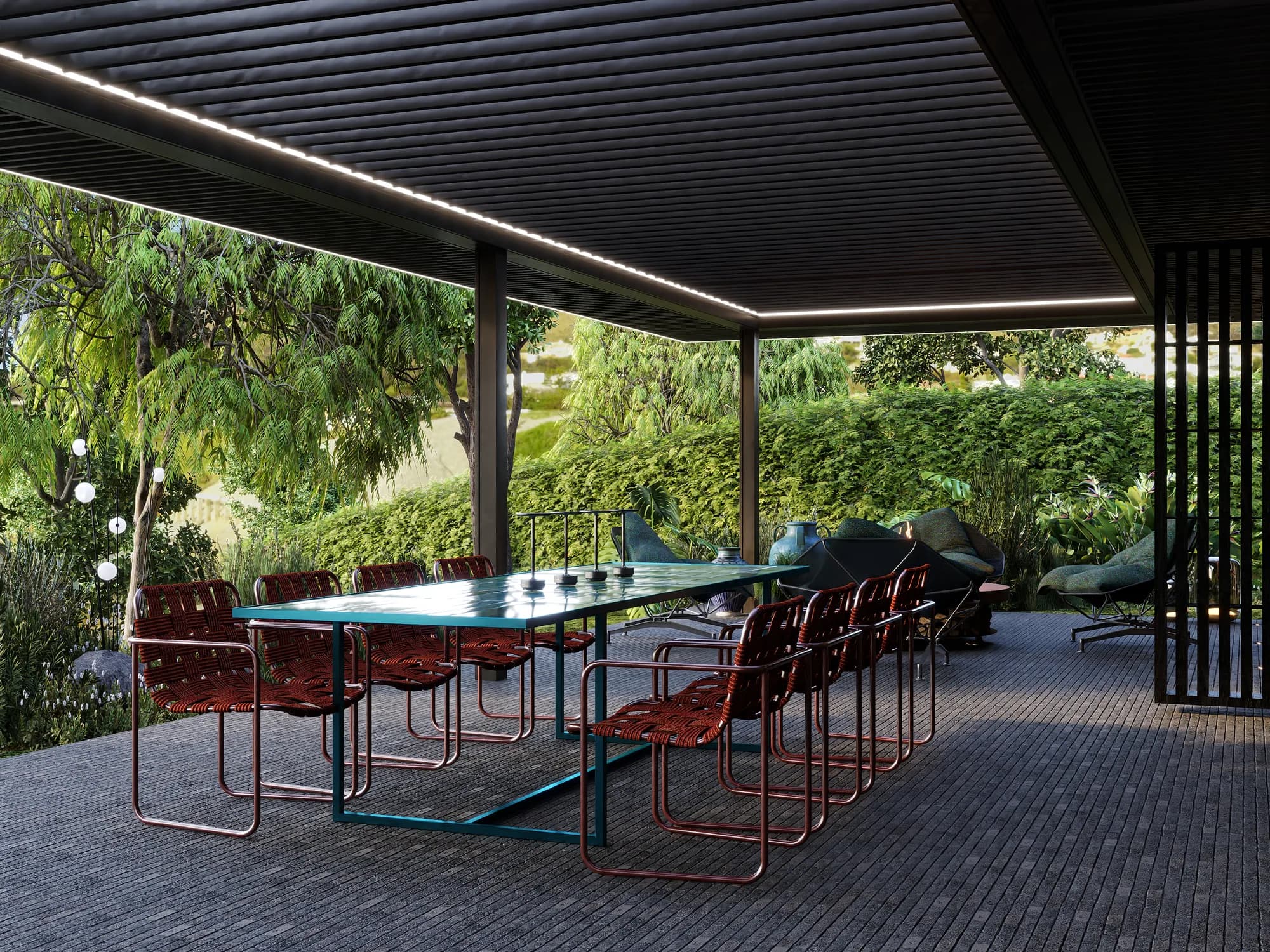
In the spa and the outdoor spaces, nature comes closest. Natural stone, timber, textured plaster and textiles are chosen for touch as much as for sight. Water and fire bring movement, and the architecture opens step by step towards the garden. Daylight and built-in lighting change the mood from day to evening, towards rest and stillness.
Throughout Ocean House, art is not added to the interior at the end. It is part of the architecture, and it shapes how each space unfolds through material, light, movement and the people who live in it.


